Showing posts with label Key Terms. Show all posts

Tuesday, April 5, 2016

Micromobilization

Definition: the taking of a protest-oriented action at a very localized and personal level [on social media]

Example: A person who identifies as pro-choice in the abortion debate posting to their Facebook wall "Like this post if you think women should have control over her own body and not be told by state legislatures that her reproductive health isn't important". Also, anyone who then does like that post.

In the text: Milan states that Melucci's analysis of social media and protest is "situated at the micromobilization level, thus observing the interplay between personal and collective identities" that is, individuals are feeling like they contributed to a movement with their minute actions.


photo courtesy of a google search of "like on facebook"

*I didn't realize I had a second term until in class today, that's why I'm posting this now
**I'm also totally guessing at this definition because she doesn't use the full term "micromobilization" after that first part of the paper

Monday, April 4, 2016

Space & Symbol

Definition: Space is defined in Heaney and Rojas as a place where one can increase their chances of creating change. They move from a place where a few people see their protest to a place where a few thousand see their protest.  Symbol is defined as a representation of what the protest is about. It enables others that are not in the loop to see the symbol and know what the protest aims to accomplish.

Example: When the World Trade Organization met in Seattle they were met with thousands of protestors who were organized in a fashion that they would stop at nothing to make their stand known. The protestors would even go as far as blocking street ways. This space of protest was important because it was the actual site of the meeting. If the protest took place outside to the meeting place the message wouldn't have been heard like it was. 
Screen shot from www.capitolhillseattle.com

Example from the text: On page 243 Heaney says that, "Fayetteville antiwar rally is a significant example of an effort by social movement leaders using place as a symbol in a forming strategy.

Friday, April 1, 2016

Pro and Anti Movement

Definition(s) (p. 11)
-Pro Movement: a social movement that attempts to get the public to accept a certain, usually newer idea or institution
-Anti Movement: a social movement that attempts to get the public to reject an existing idea or institution

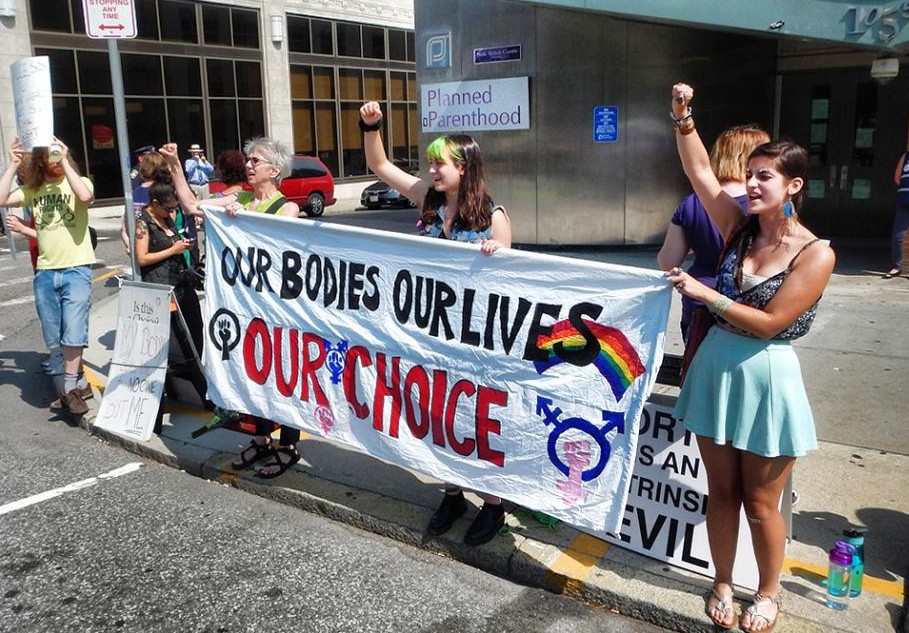
Example: The movement where one believes a woman should have total control over her reproductive health decisions, including the decision to abort an unborn child, is called pro-choice. It is the goal of this movement to get the public to accept the idea of an abortion being a simple health concern and not, as their adversaries say, the criminal act of murder.

(Photo Courtesy of jillstanek.com)

Key term 2 part 2

Tactics - plan for attaining a particular goal
 Example- the government tactic to avoid invasion was an anti immigration law.

Key term 1


disillusionment-  A feeling of disappointment or disapproval towards something or someone.

example   during the 1070 act alot of Latinos felt disillusionment


Keyword: Computation Turn


Computational Turn: A computational turn is a growth of application, specifically quantitative methods, by using media to examine important event such as social movements, protests, history etc.

Example: An example of this would be #BlackLivesMatter. The movement was about protesting police “brutality” and “racial bias”, and it really came about when people witnessed media showcasing events, like the killing of Mike Brown, and then used media (the hashtag) in order to communicate their beliefs. 

From the text: About midway through the article, Treré begins talking about the #YoSoy132 movement, a response to state television characterizing protesting students as aggressors, and the politicians they were protesting against as victims. “131 university students of the Universidad Iberoamericana published a video on YouTube in which they exhibited their student credentials and read their full names to criticize the politicians who had accused them of being criminals not affiliated with the university…..other students started to show their solidarity by stating, ‘I’m 132’, leading to the creation of the Twitter hashtag #YoSoy132.” (Treré, 906-907)

Works Cited: Treré, Emiliano "Information, Communciation & Society". Taylor and Francis Group. 2015

Freedom of Speech (Haiman)

Definition: Freedom of speech is a First Amendment right provided in the United States Constitution that guarantees American citizens the right to say what they please.

Example: The protestor known as Brother Dean who yells absolutely ridiculous insults at individuals passing by is unfortunately allowed to say horribly heinous things to passerby because university officials respect his first amendment right to freedom of speech (Kingkade).

From the Text: In his article, The Rhetoric of the Streets: Some Legal and Ethical Considerations , Haiman analyzes various protests and how they utilized freedom of speech. In one case that Haiman described, the Supreme Court was obligated to settle "the clash between an alleged right of residential privacy and freedom of speech" (Haiman, 19).

Works Cited:

Haiman, Franklyn S. "Rhetoric of the Streets: Some Legal and Ethical Considerations." Readings on the Rhetoric of Social Protest. By Charles E. Morris III and Stephen H. Brown. 3rd ed. 14-26. Desire 2 Learn. Web. 1 April 2016.

Kingkade, Tyler. "'You Deserve Rape' Sign Held By 'Brother Dean' Outrages University of Arizona Students (VIDEO)." huffingtonpost.com. 25 April 2013. Web. 1 April 2016.

Digitally Mediated Protest

Definition: a protest in which collective identity is created through social media.

Example: The use of a hashtag on any social media allows individuals worldwide to connect on identity, place, things, etc. Thus, people are able to use the hashtag to create emphasis on identities and others with the same identity or searching for that identity are able to find and explore what the hashtagged identity is promoting.


The hashtag "#HispanicGirlsUnited" focuses on the collective identity of "Hispanic Girl" and protests the request of assimilation to American culture.
Image credit: Web. 31 March 2016. Retrieved from: https://www.pinterest.com/pin/510595676481336642/

From the text: The Milan article, "From Social Movements to Cloud Protesting: The Evolution of Collective Identity" focuses primarily on collective identity through media. The authors state that a "Techno-Epistemic Break" is, "In short, although historically and culturally understandable desire, the fondness for bodily presence and face-to-face conversations ignores the social and technological transformations of the 20th century that have constructed an altogether different cultural context, a techno-epistemic break," (187). Meaning, information is dispersed through technology instead of face-to-face, as a new cultural context, to form and share collective identities.


Works Cited:

Milan, Stefania. "From Social Movements to Cloud Protesting: The Evolution of Collective Identity." Information, Communication & Society. Web. 31 March 2016.

Pinterest. Web. 31 March 2016. Retrieved from: https://www.pinterest.com/pin/510595676481336642/

Civil v. Uncivil Disobedience (Haiman)

Definition: Civil disobedience is form of peaceful protest possibly involving the intentional ignorance of existing laws. Uncivil disobedience is also a form of protest that may ignore existing laws, but it is not regarded as peaceful protest.

Example:

  • Civil Disobedience - Rosa Parks individual protest of segregation by denying to move seats on a bus in 1955 (Biography.com). 
  • Uncivil Disobedience - The death of Michael Brown elicited uncivil disobedience in Ferguson, Missouri in 2014 (Buchanan et al.)

From the Text: In his article, Rhetoric of the Streets: Some Legal and Ethical Considerations, Haiman discusses the concept of civil and uncivil disobedience. Haiman begins with a discussion on civil disobedience and its effects on American protests. He claims that participants in "civil disobedience do not expect nor ask for exemption from punishment" (Haiman, 17). He goes on to remark that these individuals know that their actions are of questionable legality, but their disobedience has a significant purpose following "a higher law"(Haiman, 17). Harman went on to claim that uncivil disobedience also has a place in American protests "despite the destruction to property, despite the loss of lives, despite the backlash of public opinion" (Haiman, 18). Haiman questions whether uncivil disobedience may have "precipitated significant reforms that previously had been notably slow in coming" (Haiman, 18).

Works Cited:

Haiman, Franklyn S. "Rhetoric of the Streets: Some Legal and Ethical Considerations." Readings on the Rhetoric of Social Protest. By Charles E. Morris III and Stephen H. Brown. 3rd ed. 14-26. Desire 2 Learn. Web. 1 April 2016.

Buchanan, Larry et al. "What Happened in Ferguson?" The New York Times. 10 August 2015. Web. 1 April 2016.

"Rosa Parks Biography." Biography.com. A&E Television Network. Web. 1 April 2016.

Politics of Visibility

Definition: "Exacerbates the centrality of the subjective and private experience of the individual in contemporary mobilizations, and has partially replaced the politics of identity typical of social movements. The politics of visibility creates individuals-in-the-group, whereby the 'collective' is experienced through the 'individual' and the group is the means of collective action, rather than its end," (Milan 887).


Example: Milan mentions "experience stories" (Milan 896) in conjunction with the term politics of visibility. One example that is used is the 'We are the 99 Percent," which a movement on Tumblr that allows people to direct there frustrations with society towards the 1 percent. This is their mission statement:


"We are the 99 percent. We are getting kicked out of our homes. We are forced to choose between groceries and rent. We are denied quality medical care. We are suffering from environmental pollution. We are working long hours for little pay and no rights, if we're working at all. We are getting nothing while the other 1 percent is getting everything. We are the 99 percent," ("We are the 99 Percent").


The posts use individual stories of people to collectively raise awareness to the problems that we as a society face on an economic level. Thus the "individual" becomes the "collective."


From the Text: "The peculiar way in which social media boost the materiality of social exchanges translates into the practice of visibility, where visibility indicates the virtual embodiment and online manifestation of groups and individuals and of the associated meanings, which are (and ought to be) relentlessly negotiated, bolstered and updated. This emerging 'politics of visibility' has flanked, rather than replaced, the 'politics of identity', so prominent in post 1960s understandings of social movements," (Milan 895).


Citation:


"We Are the 99 Percent." We Are the 99 Percent. Web. 01 Apr. 2016. http://wearethe99percent.tumblr.com/.


Milan, Stefania. “From social movements to cloud protesting: the evolution of collective identity.” Information, Communication & Society, 18.1, no. 8 (2015). 887-900.

Social Media

Social Media:


Definitions: "Forms of electronic communication through which users create online communities to share information, ideas, personal messages, and other content" (Merriam-Webster). Although this definition is pulled straight from the dictionary, it also is a good definition of the way we would define social media in our course and how it is used in the reading.


Example: Social Media is found everywhere, from Facebook to Twitter, to blog post and podcasts, this form of media has become essential to the way we as human beings connect with other human beings.


From the Text: "It is grounded on an interactionist approach that considers organized collective action as a social construct with communicative action at its core," (Milan 887).


Citation:
Milan, Stefania. “From social movements to cloud protesting: the evolution of collective identity.” Information, Communication & Society, 18.1, no. 8 (2015). 887-900.
"Social Media." Merriam-Webster.com. Merriam-Webster, n.d. Web. 1 Apr. 2016.           

Front stage vs Back stage

Definition: The concept of front stage vs back stage as explained through social media use focuses on how communications flow and present themselves. A front stage communication is all those that can be seen publicly, such as Facebook posts or Twitter posts. A back stage form of communication are all those methods that keep communication secret and unexposed to the public eye, some examples might be texting, email, messenger apps, etc.

Example: To understand the concept further you can apply this to any form of communication using social media. A Facebook post that allows several people to view it openly, and comment openly, is a prime example of a front stage communication. Back stage communication  would be anything from a Facebook private message to texting, because they aren't posted openly.

Example from text: The example from the text goes on to define the terms further, "studies have mainly tackled the digital frontstage of social media (Twitter streams, Facebook posts, YouTube videos, etc), but largely overlooked the interactions in the backstage, such as, for instance, discussions within Facebook closed groups and chats, Twitter direct messages, and instant messaging conversations." (Trere).

Work Cited 

Treré, Emiliano. "Reclaiming, Proclaiming, and Maintaining Collective Identity in the #YoSoy132 Movement in Mexico: An Examination of Digital Frontstage and Backstage Activism through Social Media and Instant Messaging Platforms." Information, Communication, and Society 18.8 (2015): 901-15. An Error Occurred Setting Your User Cookie. Taylor and Francis, 18 May 2015. Web. 01 Apr. 2016.

Collective Identity


Definition: A collective identity can be defined as the thing the connects a community. It is was they, the community, can acknowledge represents them all. In the article it is quoted as, "at its most basic level, collective identity is a shared sense of 'we-ness' and 'collective agency'," (Snow, 2001).

Example: An example of a collective identity can be found in almost any protest. One example that applies to our times is the Black Lives Matter movement. Although there may be different strands of the movement, the members use a shared sense of fighting for African American rights to come together.

Example from text: When describing why the concept of collective identity was important to the #yosoy132 movement, Trere states, "as stated in their manifesto, the movement, 'wants the democratization of the mass media, in order to guarantee transparent, plural and impartial information to foster critical consciousness and thought,".  Here we see the terms in which the protesters joined together.


Work Cited

Treré, Emiliano. "Reclaiming, Proclaiming, and Maintaining Collective Identity in the #YoSoy132 Movement in Mexico: An Examination of Digital Frontstage and Backstage Activism through Social Media and Instant Messaging Platforms." Information, Communication, and Society 18.8 (2015): 901-15. An Error Occurred Setting Your User Cookie. Taylor and Francis, 18 May 2015. Web. 01 Apr. 2016.

Thursday, March 31, 2016

Common Origin Frames

(Asención)


Definition: Treré quotes this term as a term used by Adler to describe how collective identity brings together the collective experiences of people separated by time and space (903). 
Example: In the social movement #YoSoy132 the hashtag worked as a common origin frame that connected people all over Mexico that held the same beliefs as the original 131 protestors at the political rally. 
From Text:
"Second, 'collective identity connects and assigns some common meaning to experiences of collective action dislocated over time and space', what Adler calls 'common origin frames'"(Treré, 903). 

Works Cited:
Ascención, Arturo. YoSoy132. Digital image. Expansión: En Alianaza Con CNN. CNNMéxico, 25     July 2012. Web. 31 Mar. 2016.

Treré, Emiliano. "Reclaiming, Proclaiming, and Maintaining Collective Identity in the #YoSoy132     Movement in Mexico: An Examination of Digital Frontstage and Backstage Activism through           Social Media and Instant Messaging Platforms." Information, Communication, and Society 18.8     (2015): 901-15. An Error Occurred Setting Your User Cookie. Taylor and Francis, 18 May 2015.       Web. 01 Apr. 2016.


Negotiation

 (Negotiation)


Definition: In Treré's "Reclaiming, Proclaiming and Maintaining Collective Identity" article negotiation is described as one of the three analytical tools needed by groups in order to form a collective identity (903).
Example: In order for the group to form their collective identity they had to use negotiation to determine what boundaries were placed on the group.
From the Text:
"Negotiation entails ‘the symbols and everyday actions subordinate groups use to resist and restructure existing systems of domination’" (Treré, 903).


Works Cited:
Negotiation. Digital image. Modern Business Aproach. WordPress, 3 Apr. 2014. Web. 31 Mar. 2016.

Treré, Emiliano. "Reclaiming, Proclaiming, and Maintaining Collective Identity in the #YoSoy132 Movement in Mexico: An Examination of Digital Frontstage and Backstage Activism through Social Media and Instant Messaging Platforms." Information, Communication, and Society 18.8 (2015): 901-15. An Error Occurred Setting Your User Cookie. Taylor and Francis, 18 May 2015. Web. 01 Apr. 2016.

Oppositional Consciousness


Definition:

Oppositional Consciousness:  Knowledge of an opposing opinion or view being conveyed.  This is usually followed by a defense or an action, by the offended side, to correct or change the antagonistic idea.      

Example:  Once upon a time, Mc Donalds came out with the "New Big Mac" which is bigger, better, and more flavorful.  Somebody gets upset and starts a protest, which gets quite a following, on why it is not a "New Big Mac", and its really just the same old lame Big Mac with just a little more meat in it.  The Mc Donalds Corporation becomes aware of this accusation.  In response, they explain why and how the revamped burger is different.  Basically they started using the larger more flavorful GMO beef patties rather than natural beef patties.  

Evidence:
"Along with a tradition of service and pride, an oppositional consciousness has evolved in
Fayetteville as social activists have attempted to harness hegemony by co-opting the symbolism
of Fort Bragg for their own ends." (Heaney and Rojas pg. 248)

Work Cited
Heaney and Rojas. "Harnessing the Symbolism of Fayetteville".  Springer Science+Business Media. 2006. Web. 31 March 2016.

Community Activists

Community activists:  Members who are very engaged or actively a part of a group or community.  In Heaney and Rojas, the locals are the community activists.  They are trying to point out that the Fort Bragg protest might be fueled by a hidden agenda.  

Example: Students in Douglas County protest the teacher turn-over rate.  Students are angry that teachers are being fired and want change. (Denver Post)

Andy Cross  

Evidence:  "While local community activists called attention to the potential resonance of a larger event in Fayetteville, it was principally national antiwar movement leaders in UFPJ who seized the
opportunity to use a rally near Fort Bragg as part of a larger framing strategy. For them, staging a widely visible rally in Fayetteville was one tactic to attract the attention of the media and
to transform the way other attentive audiences viewed the antiwar movement."  (Heaney and Rojas pg. 249)


Work Cited
Heaney and Rojas. "Harnessing the Symbolism of Fayetteville".  Springer Science+Business Media. 2006. Web. 31 March 2016.


Techno-Epistemic Break

Definition: a new cultural context to relay information via technology that meets social expectations of the 20th century.

Example: By distributing their Twitter and Facebook tags the, News 965 WDBO, news station is able to provide information to the public more frequently. Moreover, the individuals that follow them are then able to access the content online and on their own time.

News 965 WDBO network using social media to relay breaking news to followers.Image credit: Web. 31 March 2016. Retrieved from: http://www.news965.com/
From the text: The Deluca and Peeples article, "From Public Sphere to Public Screen: Democracy, Activism, and the 'Violence' of Seattle" focuses primarily on participatory democracy of citizens based on the importance of TV screens and other mass media circulation outlets. The authors state that a "Techno-Epistemic Break" is "In short, although historically and culturally understandable desire, the fondness for bodily presence and face-to-face conversations ignores the social and technological transformations of the 20th century that have constructed an altogether different cultural context, a techno-epistemic break," (187). Meaning, information is shared through technology instead of face-to-face, as a new cultural context.


Works Cited:

DeLuca, Kevin and Peeples, Jennifer. "From Public Sphere to Public Screen: Democracy, Activism, and the "Violence" of Seattle." Readings on the Rhetoric of Social Protest. Browne, Stephen and Morris III, Charles, eds. State College, Pa: Strata Publishing, Inc., 2013

"Where Orlando Turns First for Breaking News." Web. 31 March 2016. Retrieved from:  http://www.news965.com/


Framing

Framing

Definition:
Framing is a rhetorical tool used to force upon it's audience an intentional point of view. When a rhetorical situation is framed by those who have an agenda to push, the audience is forced to see a situation or an idea in a way that is apt to persuade them in a deliberate way. Framing often helps to define a unique way of thinking about an idea. Framing can be broken down into four techniques: bridging, amplification, extension, and transformation. Bridging is used when an overarching concept or idea can be used to connect two ideas that on the surface seem unrelated. Amplification is used to emphasize and draw attention to a certain aspect of a situation. Extension is used to extend the boundaries of a given cause or movement to include other ideas or individuals. Transformation is used when a saying or an object's past meaning is completely replaced with a new meaning.

Example: 
An example for bridging would be the rights of pets and the rights of farm animals. Many Westernized nations would be appalled to see a family eat their pet dog, and yet they eat cow's meat on a weekly basis. The two issues seem different on the surface, but really both species are still animals. What makes one better than the other?

An example of amplification would be the use of the term "pro-choice" and "pro-life" in regards to the abortion debates. Pro-choice is clarifying the fact that supporters are on the side of the mother's right to choose what happens to her body. Pro-life is clarifying the fact that supporters are on the side of the fetus's right to life.

Golden Frame 
http://www.theromantic.com/creative-romantic-ideas/craft-ideas/getting-framed/frame-romantic-craft-ideas/

An example of extension would be the growth from the past "gay rights movement" to the present LGBTQIA+ organization. The movement evolved from just involving gay men and lesbian women to incorporating bisexual, trans*, queer, intersex, and asexual individuals as well.

An example of transformation would be the N word. It originally began as a hateful word used during times of slavery and the period that followed afterwards in the United States. Throughout the years, it has come to be reclaimed by the African American population as a word that they can use for themselves and is now heard ubiquitously in pop culture.

From the Text:
In "The Place of Framing: Multiple Audiences and Antiwar Protests near Fort Bragg" by Heaney and Rojas, framing is analyzed first broadly, and then solely in the context of place. Overall, "frames establish a 'definition of a situation […] in accordance with the principles of organization that govern events […]'" (244). This frame, helping to find the aforementioned definition of a situation, is said to be deliberate and is used to help persuade an audience. When a place is considered for a protest movement, "frames have the potential to render 'what would otherwise be a meaningless aspect of a scene into something that is meaningful'" (244). Frames can be applied to many different parts of a protest, and this includes the place from which it is held, to help your protest evoke a certain feeling or a certain idea that you think will appeal to your audience. "Successful framing has the potential to alter the beliefs and values that individuals hold when making decisions" is the very essence of why framing is so important to a protest movement that wants to be seen in a very specific way (244).


Works Cited:
Heaney, Michael T. and Rojas, Fabio. "The Place of Framing: Multiple Audiences and Antiwar Protests near Fort Bragg." Readings in the Rhetoric of Social Protest. Brown, Stephen Howard, and Charles E. Morris III, eds. State College, Pa: Strata Publishing, Inc., 2013. 

Tuesday, February 9, 2016

Propoganda:

Definition: Every day, we are bombarded with one form of persuasive communication after another. These appeals to people aren't from educated debates and arguments, but instead from symbols and their manipulation. The aim of propaganda is to persuade people of something is true or not. 

Rhetoric and Propaganda are pretty close in meaning (in literary terms anyways), as they both are interchangeable forms of communication. Basically, its all about the power of persuasion. 

Example: Isis' forms of propaganda are all over the place. They go from disturbing video-recorded beheadings of journalists  to Instagram photos of cats with AK-47s. They use these images to instill fear, gain control, and to also get new recruits. 

Text: "The initiation of new arguments, the employ­ment of additional channels of propagation, or merely through the flooding of existing channels with a moving tide of discourse) succeeds in irrevocably disturbing that balance between the groups which had existed in the mind of the collective audience; and 3. a period o/consummation, a time when the great proportion of aggressor rhetoricians abandon their efforts" (The Rhetoric of Historical Movements, Page 7).