Rainbow Flag
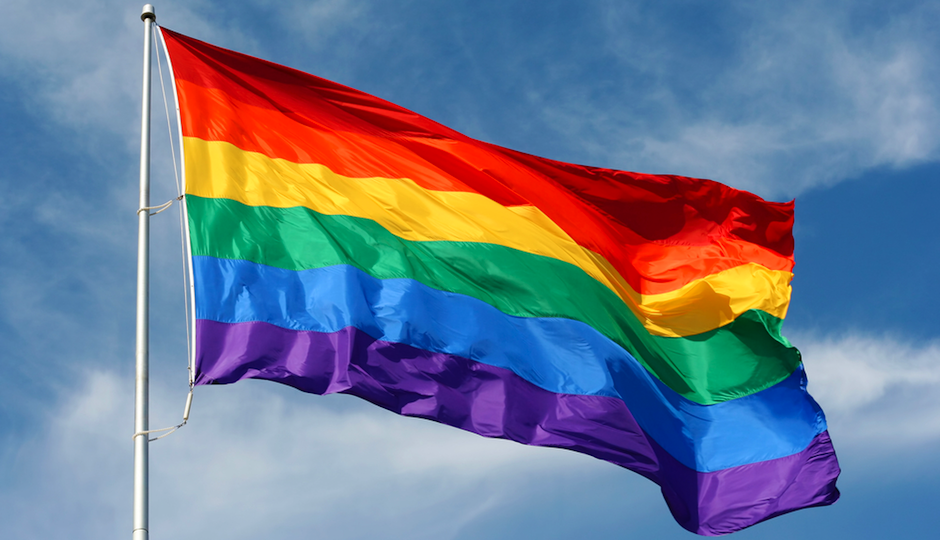
The Rainbow Flag
Baker, Gilbert. The Rainbow Flag. Digital image. Artnet News. N.p., 17 June 2015. Web. 6 Feb. 2016.
Who/what: The rainbow flag was created by Gilbert Baker in
1978, where it flew over the San Francisco Gay Pride Parade on July 25, 1978
(Zorthian). The flag originally contained the colors hot pink and turquoise
before it was altered to represent a true rainbow for manufacturing purposes.
The object (the flag) has recently grown in popularity, culminating in its
placement at the Museum of Modern Art (Zorthian).
Where: Production of the flag initially started in San
Francisco, but the symbol soon spread to other parts of America. In 1993, the
LGBT March on Washington featured the flag prominently, catapulting it to be the
symbol of the LGBT movement. It can now frequently be seen in places such as
Key West, Florida, where the longest rainbow flag (1.25 miles long) was debuted
in 2003 (SF Travel).
When: Gilbert Baker moved to San Francisco in 1970, where he
began making his own clothes. In 1978 he was asked to create a flag for the
LGBT community to replace the pink triangle (a symbol Nazi Germany used to
identify homosexual men) (SF Travel). The flag celebrated its 37th
anniversary on the same week that the Supreme Court ruled on the legality of
gay marriage: July 25, 2015 (Zorthian).
Why: Although the idea of a flag as a symbol to represent a
group of people is not entirely original, this flag was made by a man who was
not famous and not economically advantaged, but was simply one of the many who
felt marginalized by society due to his sexual orientation.
Identities: The rainbow flag is a symbol to rally around for
the LGBT community. It was heavily used in 1979, when Harvey Milk (an outspoken
gay city-county supervisor) was assassinated in San Francisco (Zorthian). Even
the colors of the flag reflect the values with which the LGBT community identifies:
“hot pink stood for sexuality, red for life, orange for healing, yellow for the
sun, green for nature, turquoise blue for art, indigo for harmony, and violet
for spirit” (SF Travel).
Work Cited:
A Brief History of the Rainbow Flag. (n.d.). SF Travel. Retrieved
February 6, 2016, from http://www.sanfrancisco.travel/article/brief-history-rainbow-flag
Zorthian, J. (2015, June 25). How the Rainbow Flag Became an
Icon for LGBT Rights. Time.

Claimed!
ReplyDelete